
The Flower Seeds We’re Buying in January
While the majority of cut flowers get started between March and May, there are a handful of flower varieties that we start in early or mid-winter each season here in Greater Philadelphia (Zone 7a). These slower growers and cool-weather loving blooms are some of the most coveted and unique varieties we grow, and they’re ready to get tucked into a seed tray in January or February:
~ Sweet Peas. This heavenly scented flower is one of my top three favorite flowers, and planting them is something I look forward to each winter! We’ll tuck the seeds into trays in our minimally-heated greenhouse in February, transplant them outdoors around early April, and enjoy their whimsical tendrils and delicate petals for the whole month of June. More common colors and varieties of sweet pea sends are widely available year round, but some of the coveted and unusual varieties (like “Juliet”) sell out quickly every winter from specialty suppliers. We always set our alarms for The Farmhouse Flower Farm’s seed sales, and we encourage you to check out Sweet Pea Gardens, Johnny’s Seeds, and The Flower People, too. For a much more detailed guide on growing sweet peas, click here.
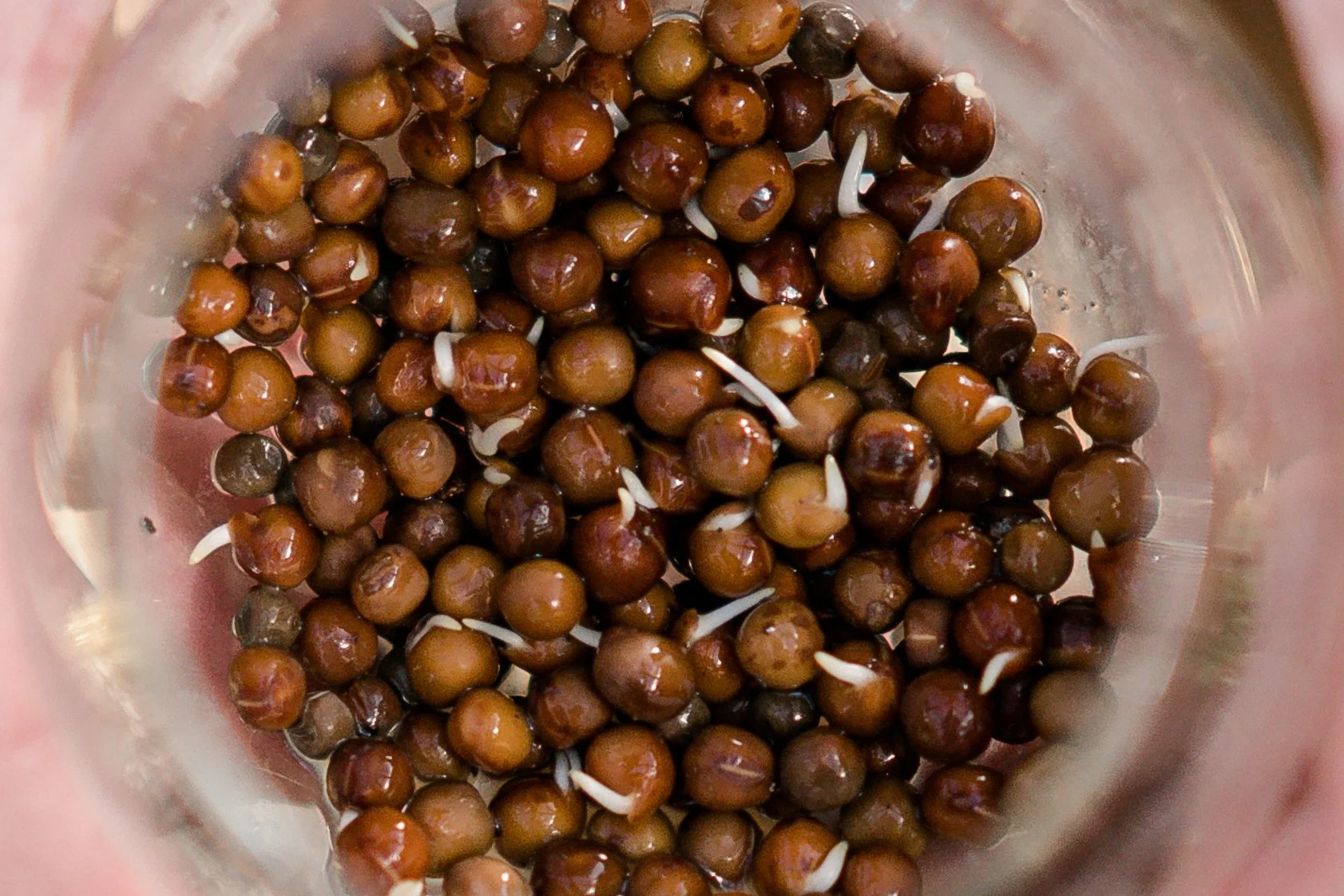
Sweetpea seeds just beginning to sprout during a germination test; captured by Ashley Meier Photography
~ Lisianthus. We start ours in December, though it shouldn’t be a problem to start yours in January (especially the Arena and Corelli series), so it’s best to source these seeds as soon as you can. These slow-growing annuals will bloom in July or August and then, with any luck, experience a second flush in early fall. They’re a staple for our summer weddings, and their vase life is incredible at a true two weeks, though they’re notably difficult to grow, so don’t say I didn’t warn you :)
-Campanula. These unique, tall flowers are some of our favorites with their signature cup-shaped blooms, and they’re some of the most coveted stems by designers in our workshops each season. (They’re also the flower that became popular on social media because you can take “shots” out of them… do with that information what you will.) We’ll purchase our seeds and start them soon, and then they’ll grace our gardens around late May. Learn from my past mistakes, and provide considerable support once transplanting them outdoors to ensure they grow tall and straight; at least two layers of a horizonal trellis will be best.
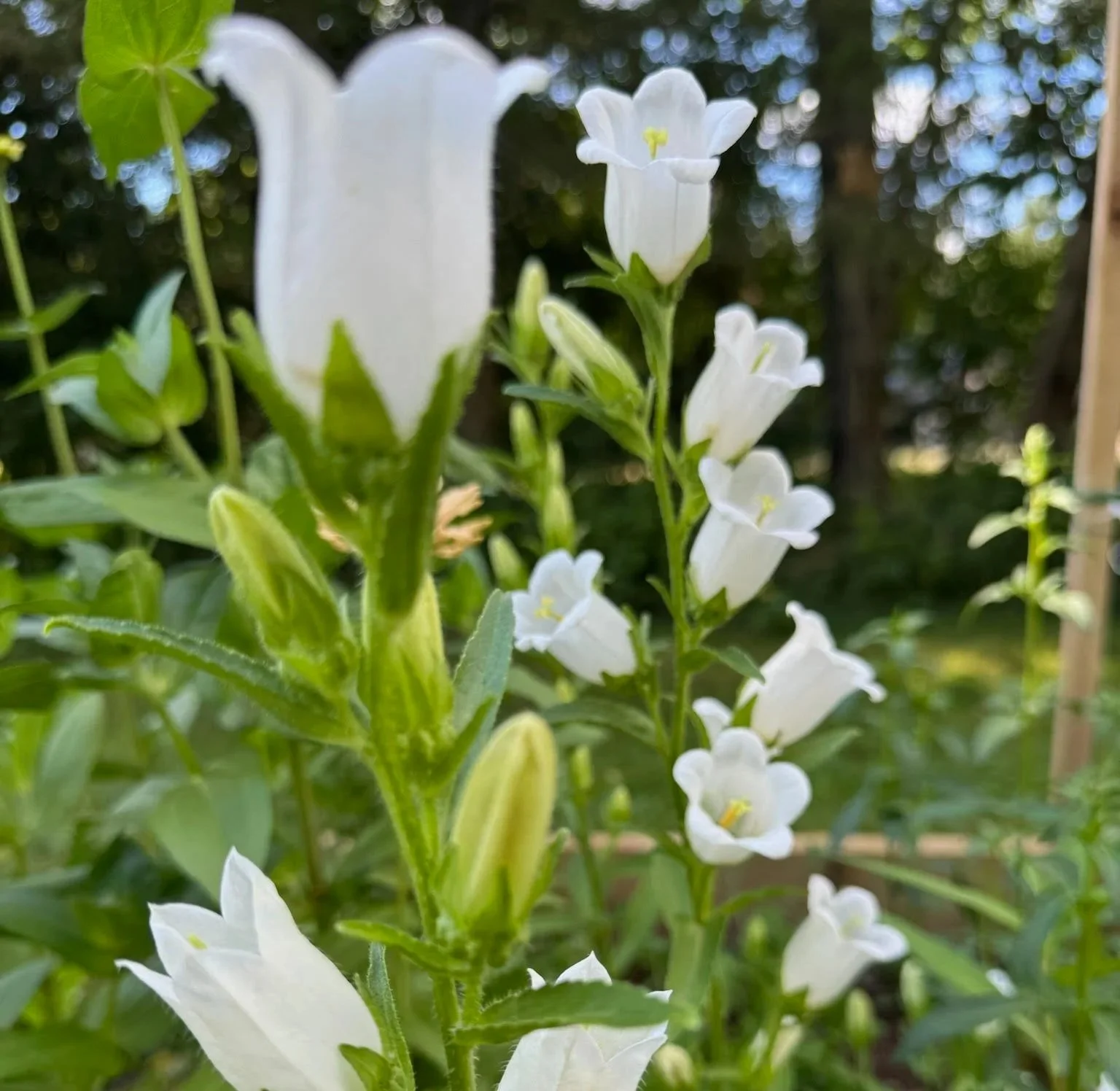
Campanula in June
~ Yarrow. Oh, yarrow… the unsung hero of the garden! This is another one of my top five favorite flowers, and I think it’s one of the most underrated specialty cuts available; the long, delicate locally-grown stems produce the most delicate clusters of tiny flowers in shades of white, dusty pinks, and peaches that bring the most elegant texture to elevate any bouquet. It’s a slow-growing perennial that gets started from seed, so it’s best for Greater Philadelphia-area gardeners to get them started indoors in seed trays around February.
-Iceland Poppies. Another one that is a bit trickier to grow, though we’ve had great luck the last few seasons. Compared to other types of poppies, Iceland Poppies offer a significantly better vase life and are a showstopping addition to our bridal and event work with their delicate petals and ethereal soft citrus colors. They’re sensitive little buggers, especially with the wind and rain, so it’s recommended to grow them under cover (even in just a simple low tunnel) if at all possible.
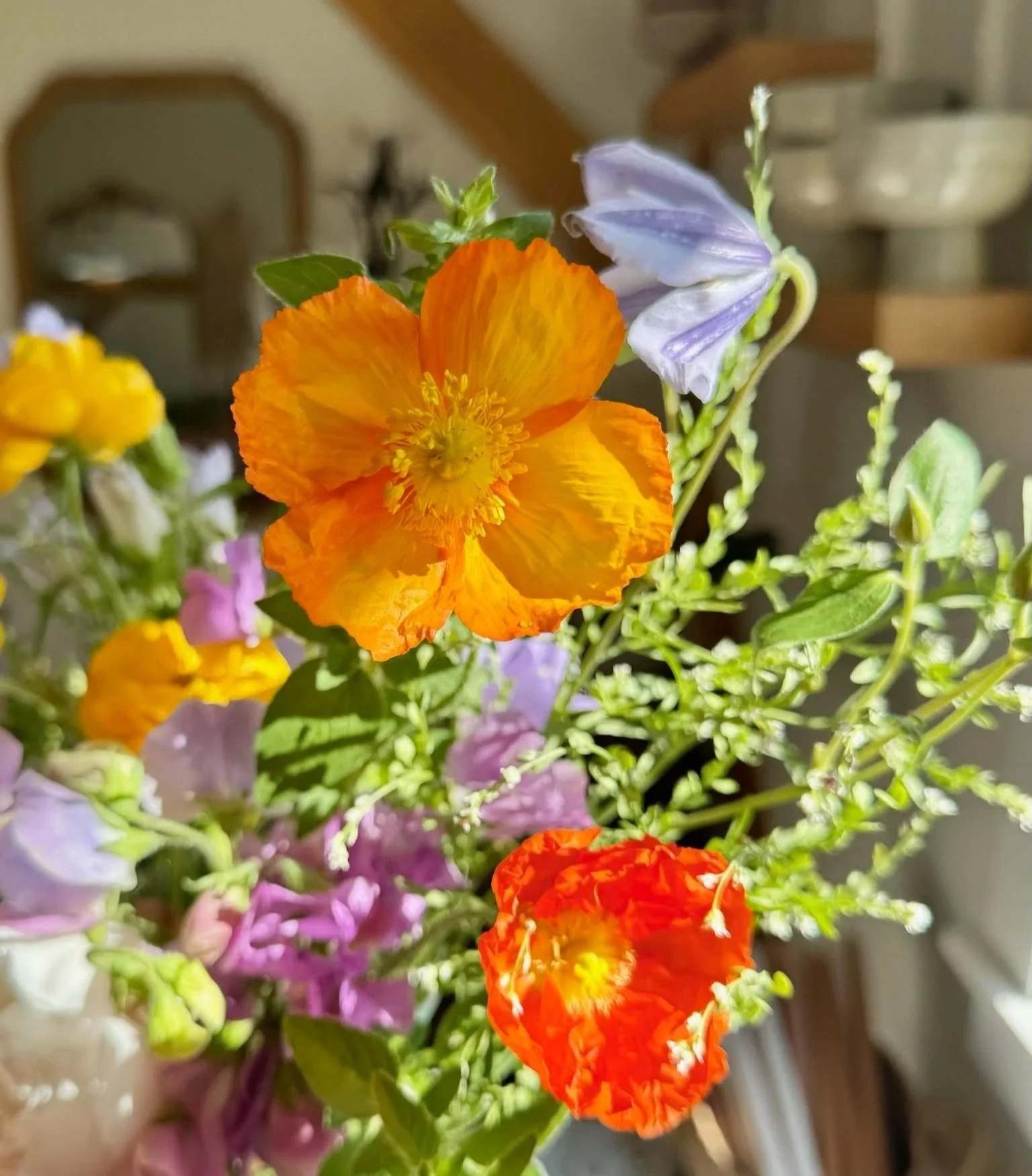
The punchy hues of Iceland Poppies, accented here by clematis and cress
-Snapdragons, especially Groups I and 2. Snapdragons, even more so than most flowers, are highly sensitive to daylight and heat; they’ll only flower under their ideal conditions, and different varieties have been bred to bloom at various points of the year. Groups I and 2 do best in the cooler weather and will produce buckets of flowers early in the season, whereas Groups 3 and 4 will flourish over the summer months. The earliest-flowering snapdragons (Groups I and 2) can get started in seed trays in January; be sure to check out the Chantilly series available from Johnny’s Seeds.
