How to Grow Delphinium
I look forward to the soft, shimmery blue, lavender, and white blooms of delphinium every year! Classified as either a short-lived perennial or biennial, delphinium are a lush and elegant “cousin” of annual larkspur.
Here in Zone 7a (Greater Philadelphia) I start them in trays or soil blocks around February, and the detailed steps below will ensure that you get to enjoy armfuls of them this season, too!
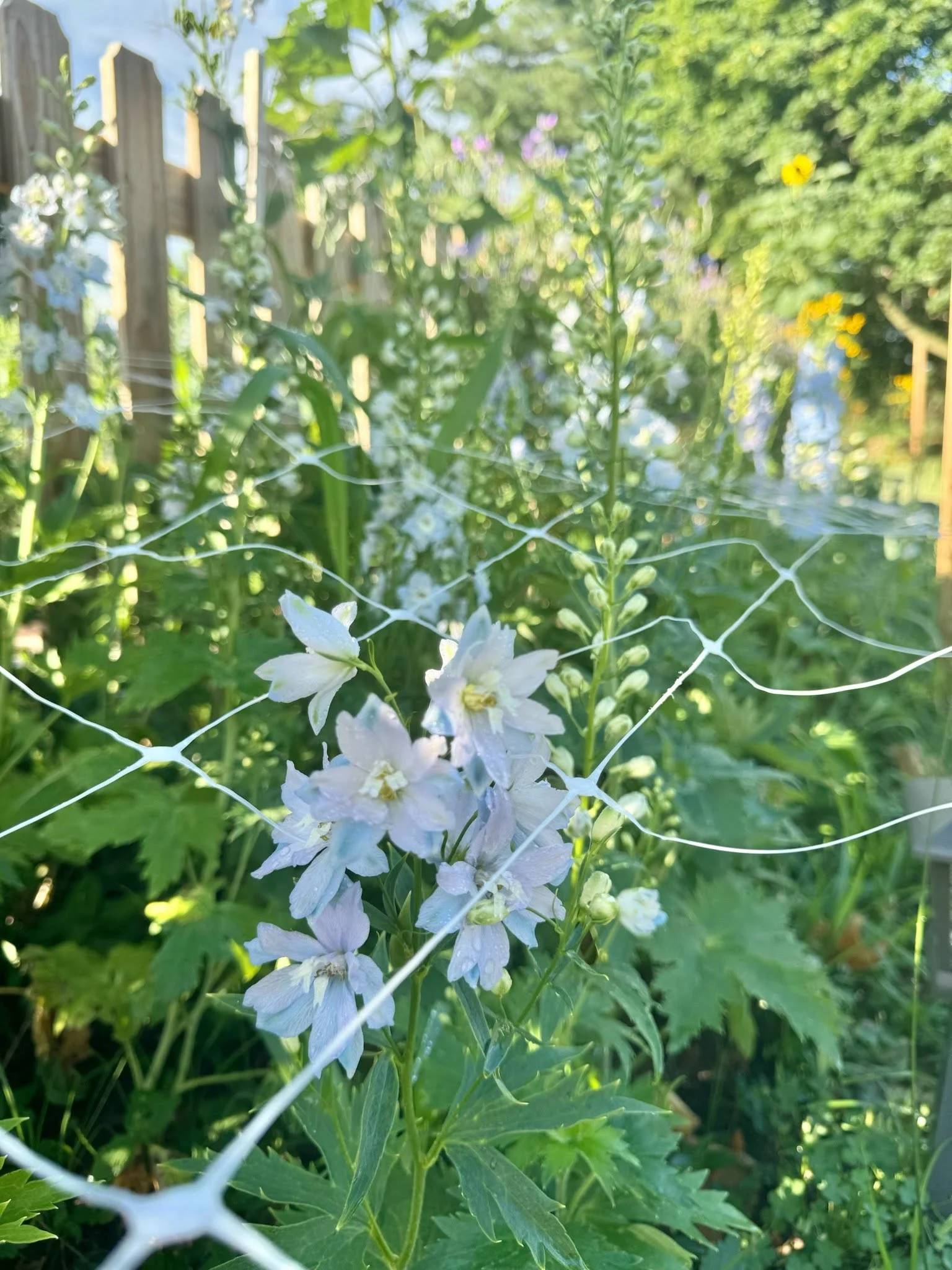
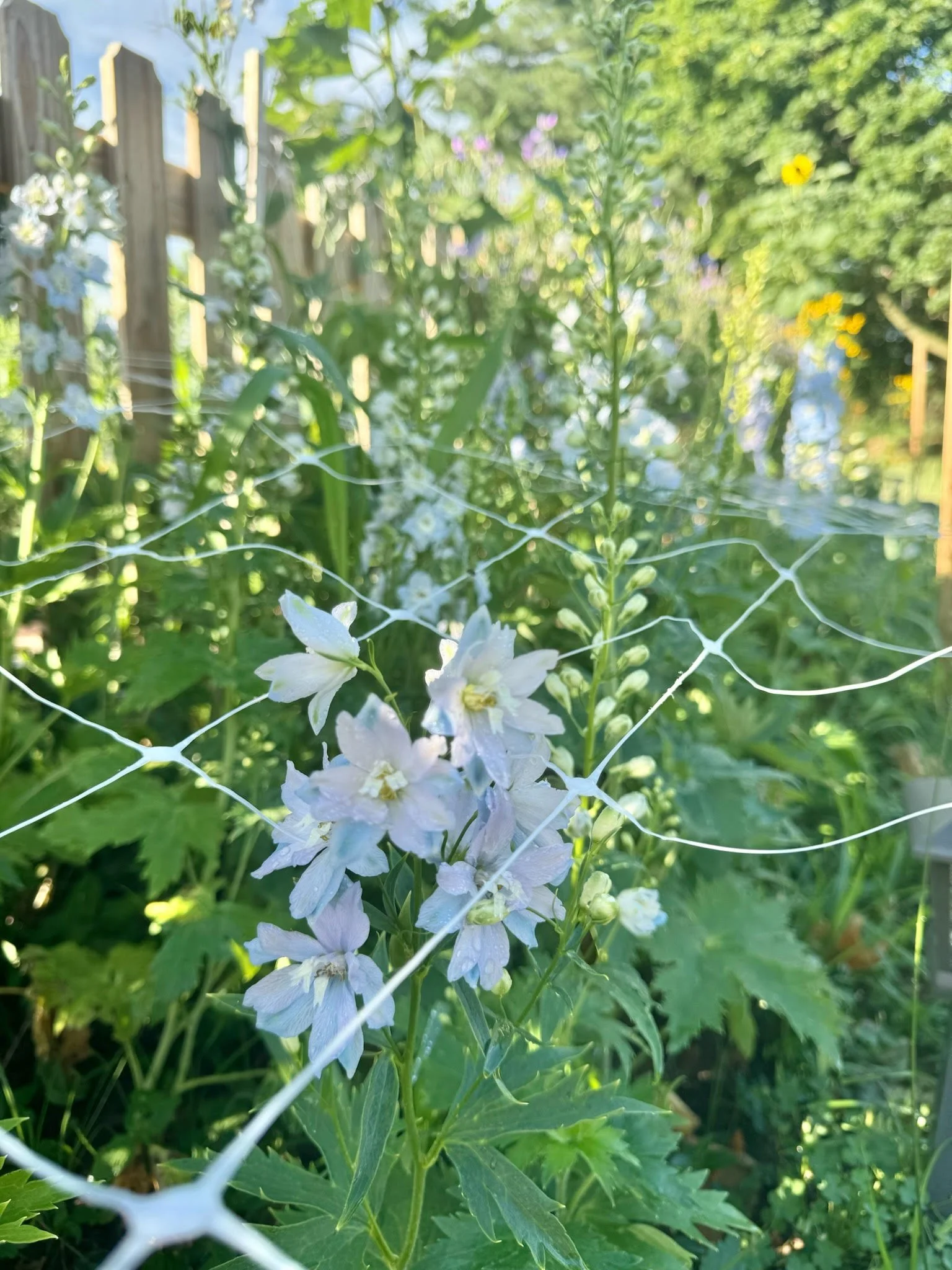
One of very few “true blue” flowers we grow each season
Preparing Your Seeds
I purchase the majority of our delphinium seeds each year from Johnny’s. They have a reputation for being a bit tricky to start from seed, and some growers recommend “cold moist stratification,” a process of chilling the seeds with some moisture to encourage them to break dormancy and give them a jumpstart. This is probably a worthwhile step if you’ll be starting your seeds indoors in room temperature, though you can skip it if starting them in a cool greenhouse, like I do.
To provide cold moist stratification for your seeds, simply take a few moist paper towels (they should not be soaking wet) and lightly scatter the seeds on them. Fold the paper towel up, enveloping the seeds, and place them in a sealed Ziploc bag in your fridge for about a week or two. Then you are good to start them in cell trays indoors!
Because I grow mine in a chilly, minimally-heated greenhouse, though, this stratification isn’t a necessary step because my seeds will already be exposed to cool temperatures. I start mine in cell trays or soil blocks directly from the packet.
Seed Starting
I start mine in February in relatively large cell trays or soil blocks, as they will be growing for about three months before being transplanted outdoors. A “32 cell tray” or “50 cell tray” will be a good size for them. Like with most cut flowers, they will benefit significantly by using a high-quality, organic seed starting mix. (Organic Mechanics seed starting mix is one of my favorites - I also really like anything from FoxFarm.) Plant about two or three seeds per cell, as their germination rates tend to be low, and cover them very lightly with the seed starting mix or vermiculite, if you have it on hand. Keep each cell lightly misted, or consider bottom watering to ensure even, consistent moisture.
If you are growing them indoors, it’s best to expose them to a sunny, south-facing window, though a simple supplemental grow light will be necessary. These can be purchased online or at your local garden center for under $30 and it’s a step you don’t want to skip; without adequate light, your plant babies will become “leggy” and weak.
They’re a bit slow to sprout, so be prepared to wait at least a week or two before seeing any shoots peek through the soil.
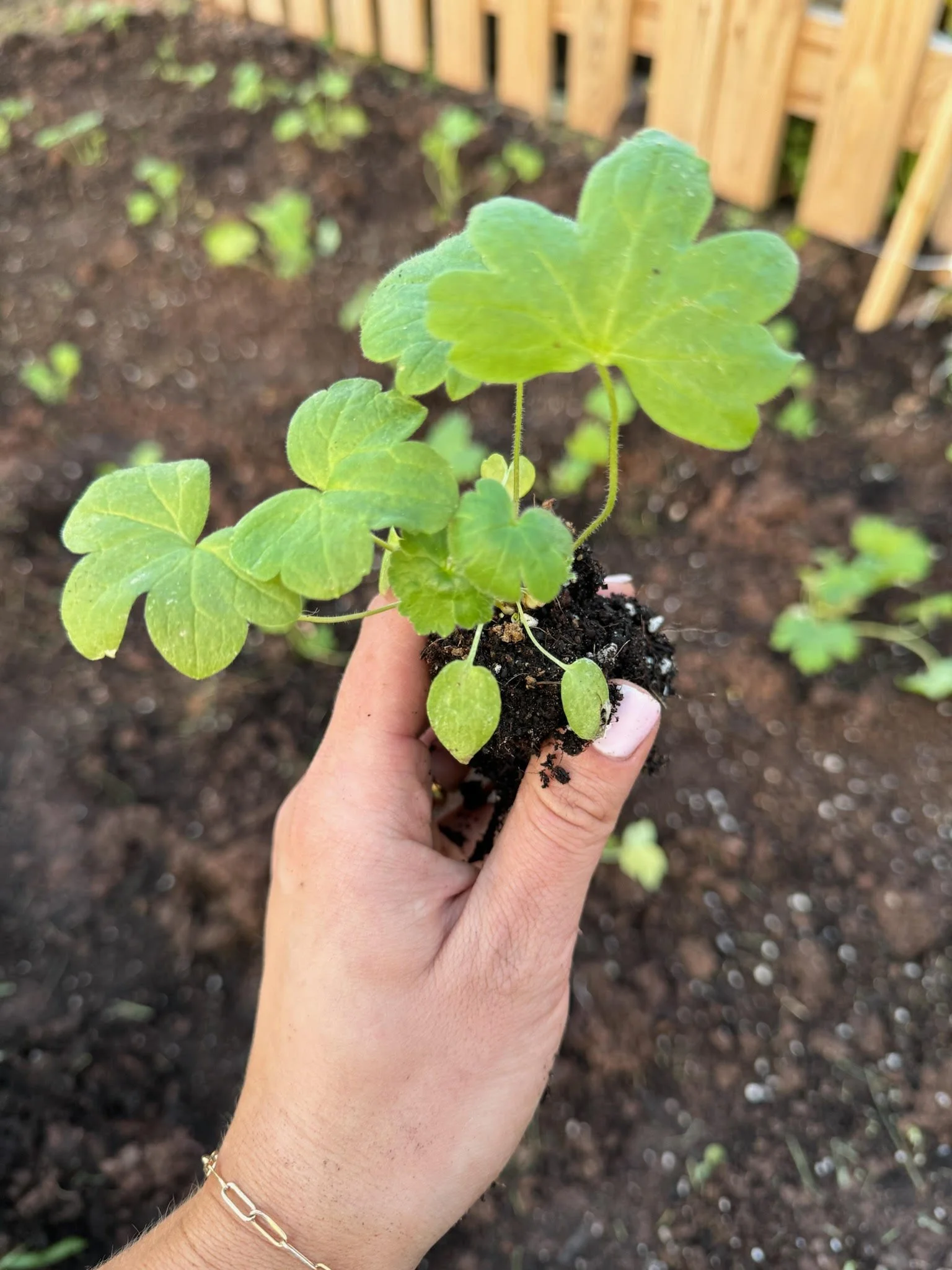
Delphinium seedling getting transplanted to the edge of the garden in early May
Transplanting
Delphinium tend to grow relatively slowly in the cell trays or soil blocks, but they really take off once transplanted outdoors to the garden! I move mine outdoors between mid-April and early May here in Greater Philadelphia, though it depends considerably on the weather patterns that year. While established delphinium plants can handle a heavier frost, the young seedlings cannot; I won’t transplant mine out until I feel pretty confident that we won’t have nighttime temps below 30 degrees or so.
Prior to transplanting them, they’ll need to be hardened off. This is a process of bringing the cell trays outdoors for gradually increasing amounts of time to ensure that they are prepared to withstand the natural elements outdoors, like fluctuating temperatures, wind, and rain.
Because they grow quite tall, it’s worth making space for them in the back of the garden, along the north side so that they do not block sunlight from shorter plants.
Growing, Supporting, and Harvesting
Keep them regularly watered, as you would for the rest of your cut flower garden.
Their stems grow tall, and they need a bit of support from rain and winds; I use a horizontal trellis to keep the stems straight and ensure they don’t topple over during a storm. This is a case of “do as I say and not as I do” lol - it is highly recommended to use at least two layers of horizontal support. I couldn’t have been bothered to do this last year, and I paid for it!
Our delphinium typically begin blooming heartily in June, and then experience a lull during the dog days of summer before blooming once again in September and October. They can be harvested when the bottom third of flowers on the stem have opened up, and they’ll last about a week for you in a vase.
All parts of the plant and seeds are poisonous, so use caution around children and animals.
Happy growing! xx