
Our Four Favorite Flower Varieties to Direct Sow in March
These cool-weather loving wedding favorites get planted directly into the ground each year in early spring.
For gardeners who don’t want to deal with cell trays, grow lamps, and the other necessary materials to start seeds indoors, there are a handful of gorgeous, textural, airy wedding-ready varieties that are hardy* enough to be started directly outdoors in March.
While the majority of flower seeds or seedlings will get planted or transplanted to the garden in May here in Greater Philadelphia (Zone 7a), the flowers listed below can be sown outdoors earlier, as they prefer cool weather and can tolerate below-freezing temperatures. Most will then bloom beginning around June.
Larkspur
A favorite in our studio, larkspur is a tall, delicate flower that brings both texture and height to personal flowers, centerpieces, or installation work. It’s significantly easier to grow than it’s cousin delphinium, and we gently scatter seeds outdoors and cover them with about a quarter inch of soil each March. They’ll start blooming for us around early June, on average, though don’t be alarmed if they take a while to germinate; it’s not unusual to wait three or four weeks to see the sprouts peek through. While some growers and seed suppliers recommend pre-chilling the seed packets before planting, we’ve never needed to do so because we plant them when temperatures are still cool. Though if you’re not starting them until April or so, I’d recommend popping the seeds in the fridge for at least a few days before tucking them into the garden.
It feels like we can never have enough when it comes to wedding work — if you’re growing for weddings, I would recommend planting more than you think you need :) I especially love “Misty Lavender” and “Fancy Smokey Eyes”.
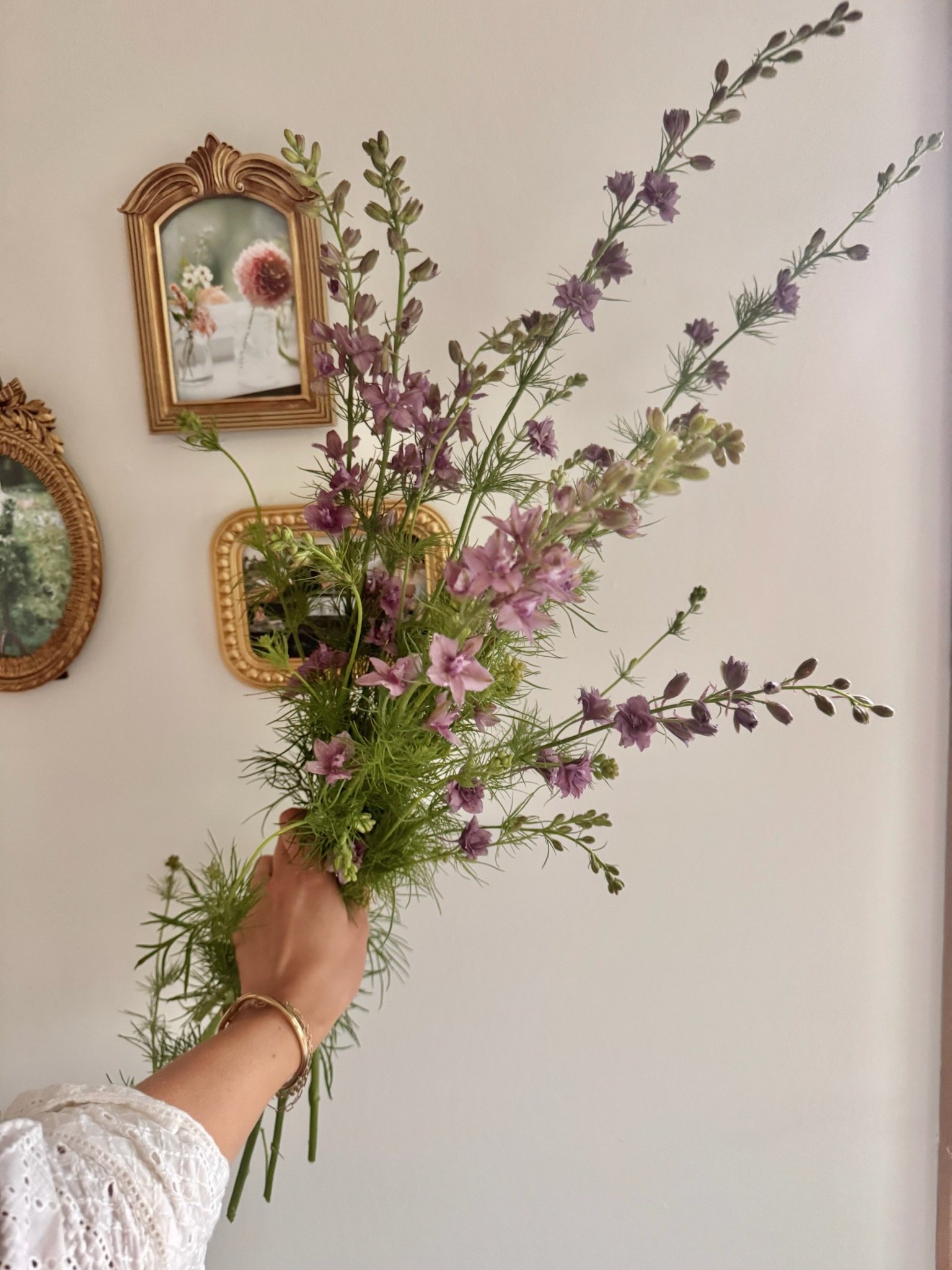
Larkspur ~ “Misty Lavender”
Bells of Ireland
One of the most loved varieties these past couple of years, Bells of Ireland is a truly unique large green foliage that offers both height and whimsy in the popular verdant green shade that is requested in so much of our wedding work. It’s great for installation work and larger statement pieces, as it’s notably tall. It’s easy to grow, thankfully, and we start all of ours directly in the garden, as it doesn’t transplant too easily. Pat them very gently into the soil and avoid planting them during weeks with heavy rain, as this can push the seeds below the soil surface and they need light to germinate.
Bells of Ireland are also notorious for self seeding, which means that they’ll drop seeds at the end of their annual growing cycle, which will survive through the winter and germinate on their own the following year. So once you start growing Bells of Ireland, you’ll likely find them popping up in your garden the following year, too.
Corn Cockle (Agrostemma)
If I had to predict just one flower that will become 2027 and 2028’s “It” variety in wedding work, it would be Corn Cockle. This delicate, soft, dainty flower is a florist’s dream, and we’re planning to grow significantly more in the season ahead. It’s best used in personal florals and bud vases, and I would put them in the same category as cosmos, but would consider Corn Cockle to be more elegant and refined. We especially love the “Blossom Pearl” variety for weddings with ivory and blush tones. The only downside is that it has a relatively narrow bloom window, and will be most abundant in June from a late March sowing, as it prefers cooler temperatures and struggles in our July and August heat.
Cover seeds lightly with soil, keep lightly watered, and be sure to stake them to protect from wind and rain; I’d highly recommend a horizontal trellis, too, as the delicate stems can get a bit tangled.
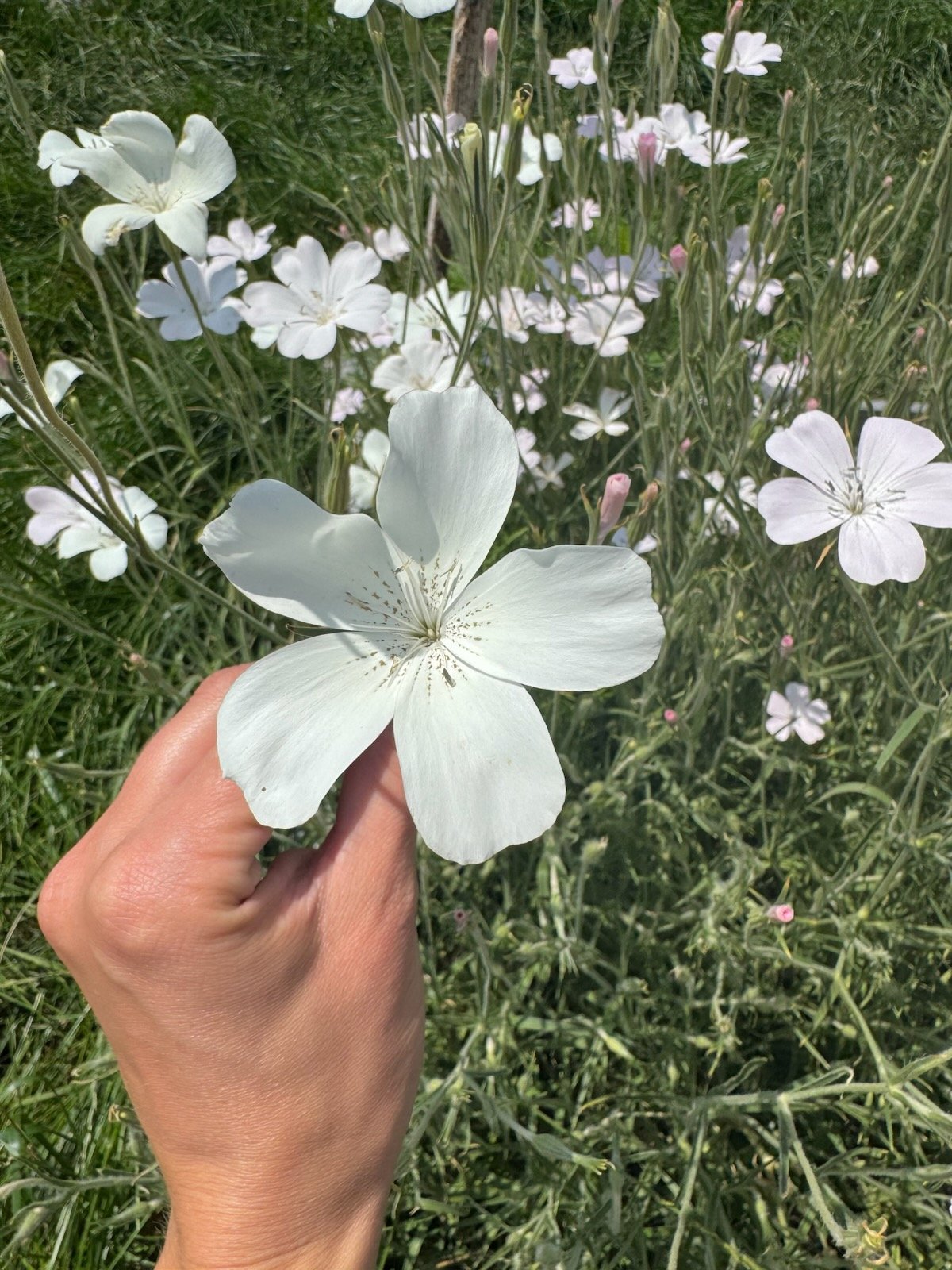
Corn Cockle ~ “Ocean Pearls”
Ammi
It doesn’t get much more textural than Ammi! It’s a refined filler flower that comes in shades of white, green, and dusty purples (my personal favorite is “Purple Kiss”) and is extremely easy to grow. Last year I scattered seeds in a far corner of my home garden in March and completely forgot about them — until they bloomed a couple months later! I probably got lucky that we had a rainy spring last year and they were naturally provided with plenty of water, but that shows just how easy they are to start from seed :)
They have a relatively narrow bloom window, so it’s best to succession plant them if you wish to cut them throughout the summer. I also highly recommend a horizontal trellis, as their top heavy blooms can be susceptible to wind damage.
*Hardy refers to a variety that can tolerate temperatures below freezing, often down to 20 or 25 degrees Fahrenheit. The exact temperature tolerance depends largely on the specific variety, but will also vary depending on factors like what stage of growth they’re in (more established plants can tolerate low temperatures better than young seedlings, on average), how hydrated they are, and how long the low temperatures last.
